



Guest post · By Dr. Vitalina Ilyasli, MD
Choosing a clinic abroad can mean a dozen open tabs, glowing reviews and a stranger on WhatsApp saying, “Don’t worry, we’ll take care of everything.” Behind it all sits a reasonable question: who am I trusting with my health?
As a physician, I am interested in what these conversations leave out. A reassuring phrase is not evidence that a clinic is unsafe, but it is not a substitute for a clinical explanation either. Here are eight messages that deserve a follow-up before you pay a deposit.
1. “There are no risks with this procedure”
No medical intervention is entirely risk-free. Depending on the procedure, risks may include infection, bleeding, scarring or an adverse reaction to medication or anesthesia. What matters is whether the treating clinician explains the risks relevant to you and what the team would do if a problem occurred.
A known adverse effect is not automatically evidence of a clinical error. Equally, calling something a “normal reaction” should never replace assessing a patient’s symptoms. Ask what is expected, what needs review and what requires urgent help.
Ask: “Which complications can occur with this procedure, and how do you assess and manage them? If you quote a complication rate, what patients and follow-up period does it cover?”
2. “Results are 100% guaranteed”
Healing, scarring and tissue response differ between patients. A promise about a clinic’s service or a revision policy is different from a guarantee of a biological result.
If a guarantee is offered, ask for its terms in writing: what it covers, its exclusions, its duration, and whether further treatment, travel or accommodation would cost extra.
Ask: “What exactly does the guarantee cover, and can I review the written terms before paying?”

3. “This price is only valid until tonight”
A sales deadline is not a medical reason to rush an elective procedure. You need time to understand the proposed treatment, consider alternatives and decide freely.
Try this: “I need time to review the treatment plan and costs.” Notice whether the clinic answers your questions or simply increases the pressure.
4. “The doctor will meet you on the day of surgery”
The timing of an in-person consultation varies. The concern is a process that leaves no meaningful clinical review before travel and no time to act on new information before treatment.
The clinic should explain who reviews your history, medications, allergies and any indicated tests, when that happens, and what happens if you are not suitable for the procedure.
Ask: “When, and by whom, will I be assessed, and will I have time to discuss the findings before deciding?”
5. “You don’t need any tests; we’ll check everything here”
Not everyone needs the same tests, and repeating a test on arrival can be appropriate. The question is whether a clinician has reviewed your history and decided what is necessary for your procedure and health.
A clinic should not dismiss previous operations, ongoing conditions, medications or allergies. Send records through an agreed secure route.
Ask: “Which records do you need in advance, and who decides whether I need tests?”
6. “Our surgeon performs 20 operations a day”
A headline number tells you little without knowing what is counted, how complex the procedures are and how the team is organised. Experience matters, but volume alone does not show how much attention your care will receive.
Ask: “Which steps will the named surgeon perform personally, which will other qualified staff perform, and who will review me during recovery?”
7. “Everything is included”
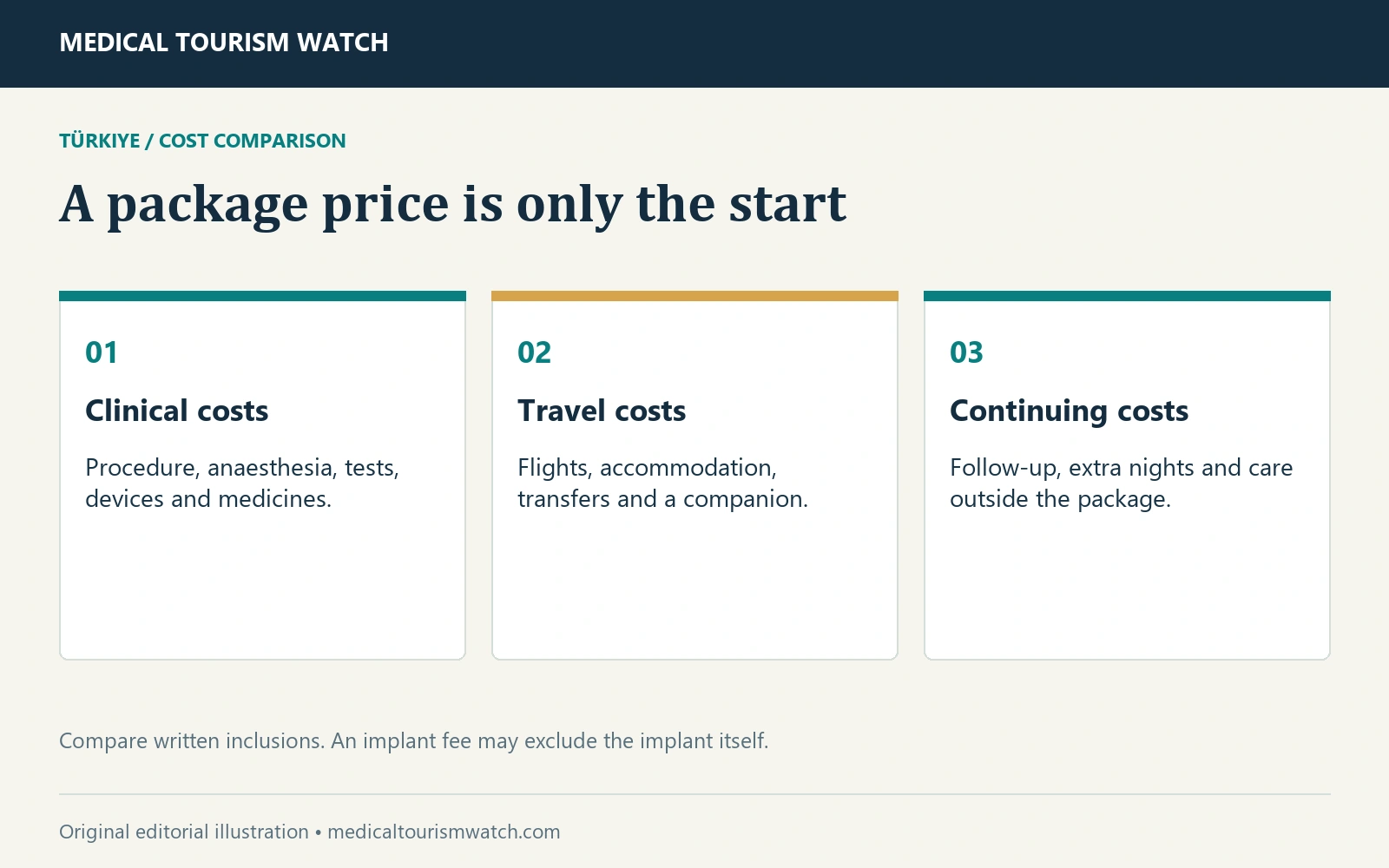
The phrase alone does not define the package. Ask about tests, anesthesia, medication, dressings, implants, extra nights, follow-up and treatment of complications. Compare the written quote with the contract.
Ask: “Can you send an itemized list of inclusions, exclusions and circumstances in which the price can change?”
8. “You can fly home tomorrow”
Fitness to fly depends on the procedure, your recovery, your health and the journey. Surgery and prolonged immobility can increase blood-clot risk. There is no single safe departure date for every patient.
Ask: “What stay and follow-up does the treating clinician recommend in my case, and who will assess whether I am ready to travel?”
Before you pay
A useful answer names the responsible clinician, explains the limits of the promise and gives you something you can check. If an answer is missing, pause and clarify. A friendly chat can begin a relationship; it cannot replace an assessment, an informed decision or a written aftercare plan.
Also in this series: The 7 Questions I Ask Before I Trust Any Clinic Abroad.
About the author


Dr. Vitalina Ilyasli, MD is the Chief Medical Officer & Medical Reviewer at Altay Medical Tourism Consulting and a member of the Medical Advisory Board at Medical Tourism Wiki. You can follow Dr. Vitalina on LinkedIn and Instagram.
Further reading selected by the editor: CDC Yellow Book: Medical Tourism; NHS: Consent to treatment.
Medical information: This article is for general education and does not replace an individual assessment by a qualified healthcare professional.