


.
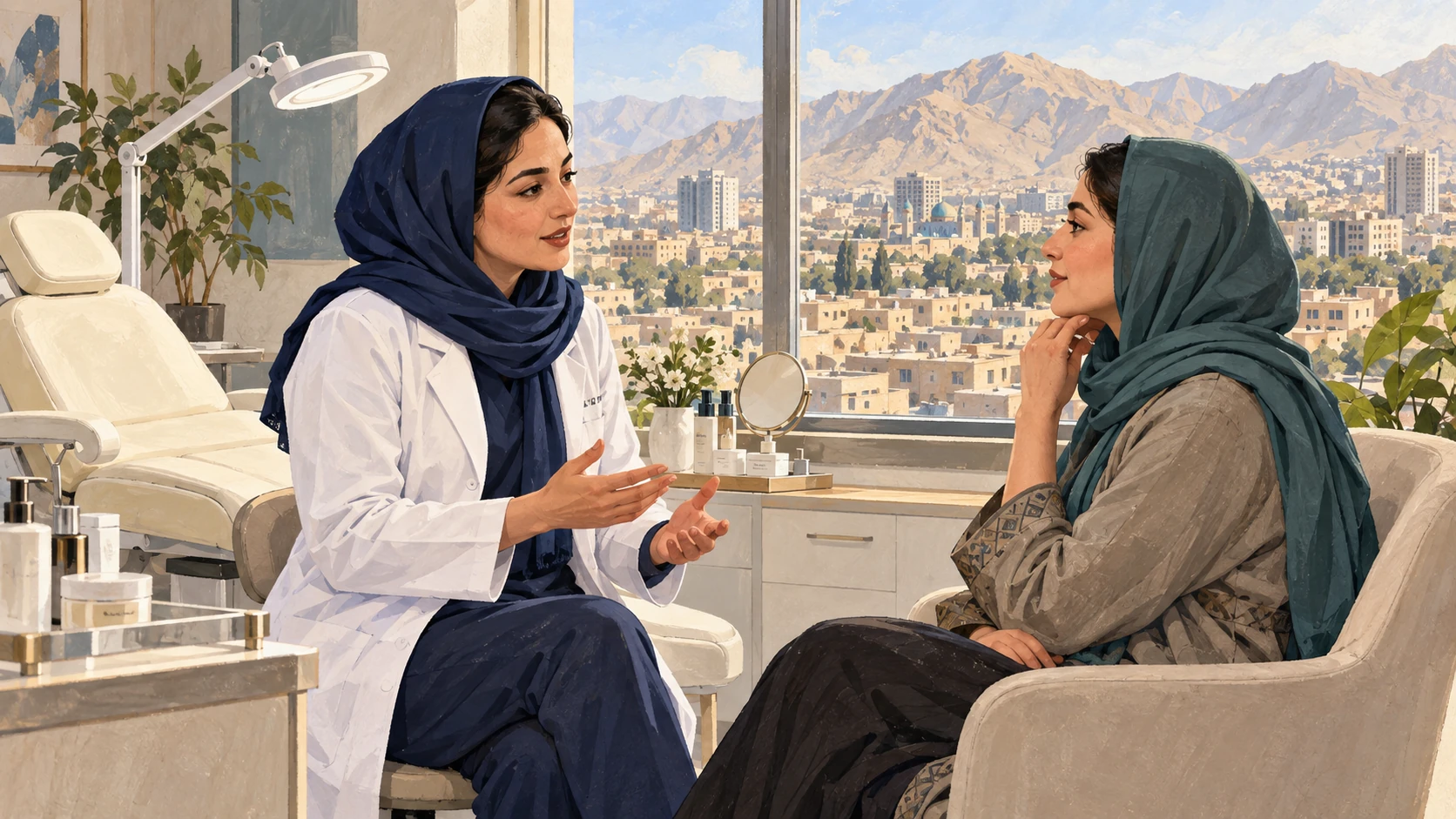
Kabul – Over the last three years a new type of business has started to appear around Afghan cities: medspas offering everything from Botox and fillers to hair transplants and facelifts. Kabul alone is home to at least 20 such standalone clinics. Media headlines have dismissed it as a trend of “Botox under burqas,” but the owners and practitioners say the services they provide do more than boost their patients’ confidence; they are also putting hundreds of men and women to work in a country facing 13 percent unemployment.
“Women still want to be beautiful. That never goes away,” said Sabera Rasoully, head dermatologist at the Turkish Clinic, when asked about the apparent contradiction between the Taliban government’s restrictions on women’s dress and the six competing clinics within a kilometer and a half of her facility. In fact, Rasoully said the Islamic Emirate’s limitations on female employment and the shuttering of universities for women may have worked to the industry’s advantage: “More women are at home now, they aren’t working, they aren’t going to school. So they have more time to think about their looks.”
That spending stands in contrast to the wider economy. Aid cutbacks, sanctions on government officials and being cut off from the global banking system have all placed a strain on the country’s finance, with real GDP expanding by only 1.9 percent. The United Nations says at least 22 million Afghans are in need of humanitarian assistance. At least 10.7 million of them are women and girls, but Rasoully said urban Afghans with disposable income are still willing to spend, so long as the quality is there.
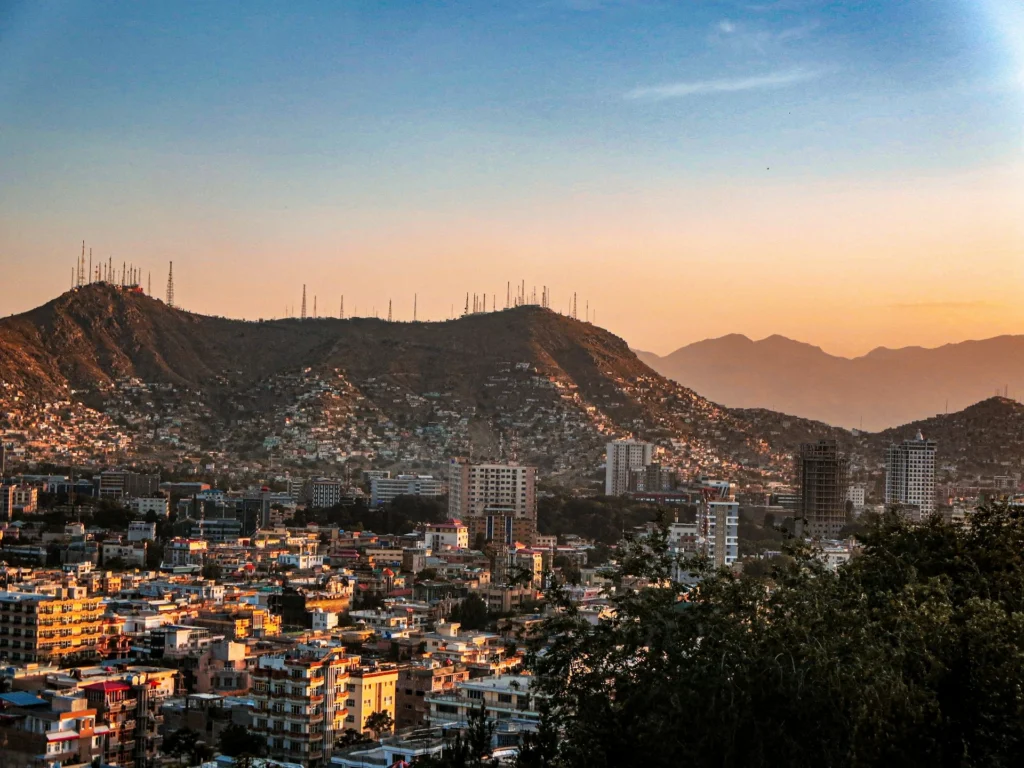
“People’s expectations have gone up in recent years. They want better apartments; they want to eat in nicer restaurants. And they want to look better,” Rasoully said. Again, her assertion is borne out by the landscape of the city. Kabul has seen a recent boom in high-rise apartment buildings where units can easily go for $150,000 and new eateries built for hundreds of thousands, even millions, of dollars.
A changing market for cosmetic procedures
Dr. Aminullah Hamkar made the same observation when I reported on Kabul’s cosmetic surgery industry for Himal Southasian in 2015: “Afghanistan has a middle class now. They, like the middle class in the rest of the world, have different worries than poor people.”
Rasoully said she noticed the beginnings of this shift as far back as 10 years ago, when she was still training under surgeons who mainly specialized in reconstructive procedures.
“Most of our teachers were older men who dealt mainly with war wounds, but I started to see that more and more women were asking about cosmetic procedures,” she said. “I began to read up on the procedures and even brought in patients to work on.”
Travel barriers bring demand closer to home
Another recent development has also worked in favor of these clinics, Rasoully said. In the five years since the Taliban’s return to power, Afghans have been largely unable to procure visas to India and Pakistan, two countries that hundreds of thousands of Afghans have historically turned to for medical services. Add to that the war in Iran and the difficulty of obtaining visas to Turkey and the UAE, and Afghans are finding themselves largely unable to travel outside the country, whether for leisure, medical treatment or business.
“People now realize these things are possible in the country, so they don’t have to try and get a visa for a relatively small procedure,” Rasoully said. Wazma, who has been getting laser treatments and fillers for the last three years, said she has even taken friends and relatives visiting from abroad to the Kabul clinics.
“I haven’t had a single bad review yet,” said the 31-year-old, referring to the friends she has brought to the clinic. “The clinic has never failed me.”
This rising demand has also put pressure on the clinics themselves. Just four years ago, starting a simple clinic cost between $30,000 and $50,000. Today, Rasoully says it has ballooned to well above $100,000, and “at least half of that will go to the design.”
That focus on aesthetics has created a situation where, “people walk in and judge the place by the décor,” she said. Rasoully said once patients are sufficiently impressed by the aesthetics they’ll ask about the procedures. The costs of those procedures may shock Western customers ($40 for a microneedling session, hair transplants starting at $300, liquid rhinoplasty for $130), but for Afghans they are still seen as a luxury.
In 2015, Hamkar charged between $350 and $450 for a surgical rhinoplasty. A liquid rhinoplasty today costs $130 and involves no surgery at all.
“My personal experience has been great. You can get really high quality services here at a low price,” Wazma said of the skin treatments she’s received.
Standing out in a competitive market
Standing out is the constant challenge, and it’s something the Kabul Cosmetic Clinic prides itself on. Edris Ahmadzai, the general manager, said when they decided to expand the clinic’s services beyond hijama cupping therapy, something they had specialized in for 14 years, they knew they had to offer services no other clinic in the country could provide. For the clinic, that means offering services like liquid rhinoplasty, which uses fillers in place of surgery, and $4,000 hair transplants that he said use only genuine Turkish products and procedures.
“We really want to move away from surgical procedures because we want to limit any chance of complications,” Ahmadzai said.
Supply pressures and questions about quality
Procuring genuine products and machinery is difficult. The US-Israeli war on Iran has only added to the challenge. Both Rasoully and Ahmadzai said the majority of their products and equipment come from Iran, Turkey and the UAE and that the shipping issues along the Strait of Hormuz and the attacks on Iran have severely affected their ability to import the needed tools.
“Just this week I had to tell a patient to wait until January for his next procedure in part because the next step in his treatment requires equipment that’s been stuck in Dubai for months now,” Rasoully said.
Ahmadzai said the need for the foreign products is real, because the local market is full of inferior or knockoff products that get passed off as the real thing. So far this year, the Ministry of Public Health has destroyed 1,290 tons of expired, substandard, and illegal medicines, food items, and health products.
“Unless you’re the importer or a doctor who has worked and studied abroad, it would be very difficult to know the difference,” Ahmadzai said, noting that their head dermatologist, Dr. Saifullah, studied and worked in Lahore, Pakistan.
Shams, an NGO worker who underwent hair transplant services at a Kabul clinic last year, said he still has doubts about quality control, “I saw good results, but it’s very painful in the beginning,” he said of the five rounds of PRP treatment he paid $390 for.
“I’m just worried that not every doctor is as careful or thorough, because it’s very easy to make money with these things, but you have to be really certain about your recommendations,” Shams said.
This is something Ahmadzai stressed. He said there had been reports of a fatality during a hair transplant procedure, which he suspected was due to inattentiveness. Ahmadzai stressed the importance of pre-procedure blood tests and thorough questioning of allergies and medical histories.
“In too many offices, it’s a nurse or a technician that’s in charge,” Ahmadzai said.
Working under Taliban restrictions
Rasoully and Ahmadzai said the government keeps a close eye on their businesses and that the Ministry of Public Health is working on certification processes. Rasoully said her clinic is visited at least three times a week by officials from the Ministry for the Propagation of Virtue and the Prevention of Vice, whose job it is to ensure that the Taliban government’s morality laws are implemented. The ministry’s officers, who wear white lab coats, ensure that unrelated male and female patients maintain a proper distance, that a partition is placed for female patients to sit behind and that female workers wear proper hijab.
Most of the workers in these clinics, from receptionists to technicians, tend to be younger women. Women are able to work in the medical profession with limited government interference, but ensuring that the government approves of their presence and appearance is vital given that in 2023 beauty salons were forced to shut down across the country.
Wazma, who has been going to the clinics for three years, is confident about the industry’s future. She said she understands people’s misgivings about women in Afghanistan, where the Taliban-led government has kept them from most jobs and out of school beyond the sixth grade.
“I don’t blame anyone for thinking it’s strange, but if one does their research and sees the results, they’ll definitely think otherwise,” she said. “They do a great job, nothing strange about that.”


