


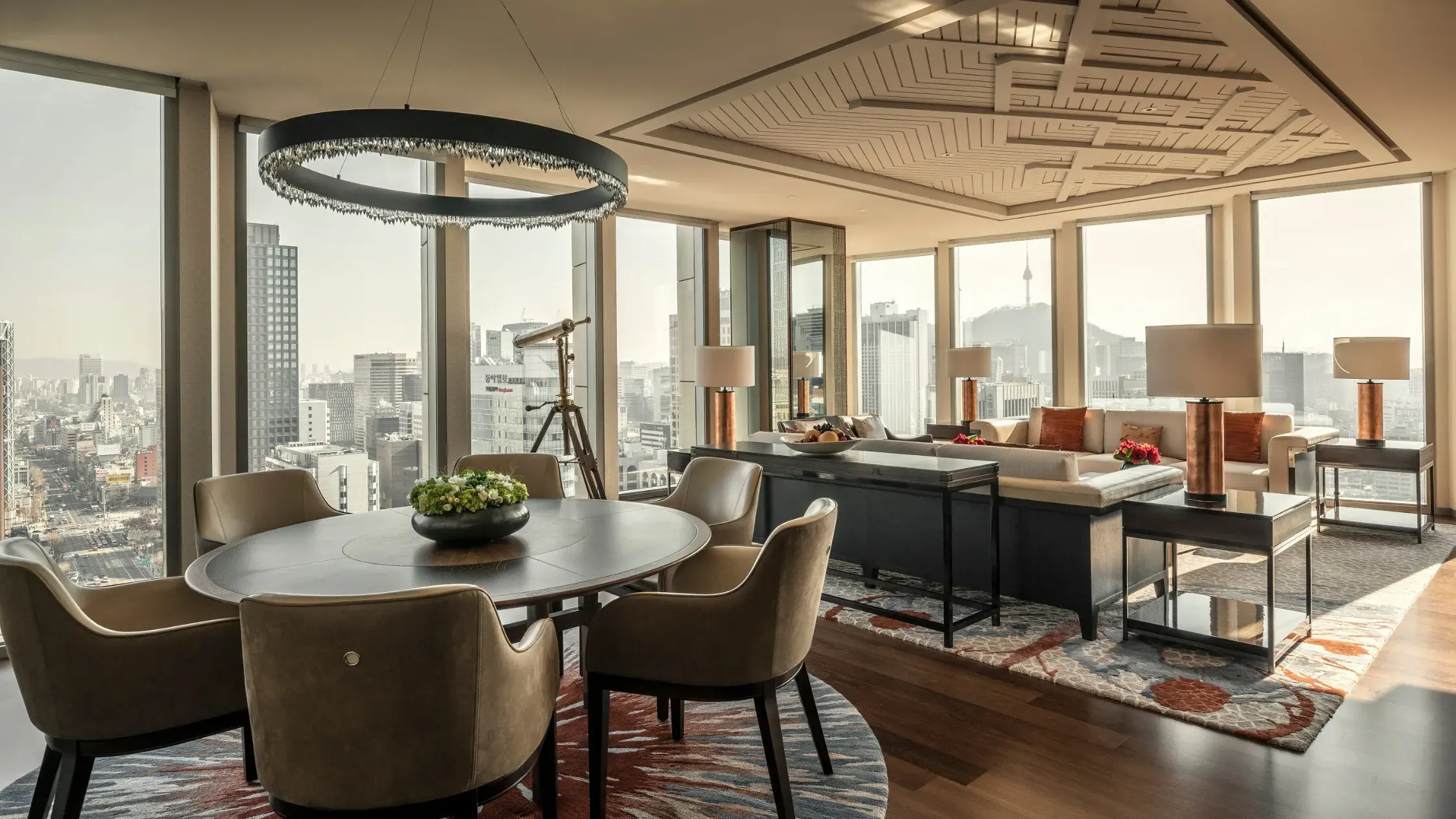
Book surgery abroad and you’ll find plenty about the hospital. Its accreditations, its surgeons, its photographs of clean corridors.
Then you book a hotel, and nobody tells you anything.
Seoul is closing part of that gap. From 16 to 30 September, hotels and other registered accommodation in the city can apply for a designation called Seoul Medical-Friendly Accommodation, run by the Seoul Metropolitan Government with the Seoul Tourism Organization. Properties are assessed on paper, inspected in person, and reviewed with outside experts. The certificate lasts a year.
Accommodation normally sits outside every accreditation scheme in this industry. Hospitals get inspected. The room where a patient spends the fortnight after discharge does not.
What’s being checked
Five things, and they’re more specific than the name suggests.
How close the property is to a hospital. Whether someone with limited mobility can get through the building — accessible routes, not a ramp at the front door and stairs everywhere after it. Whether a 24-hour emergency response system exists. Whether the hotel can handle a long stay, including laundry, which sounds like a small thing until you’ve spent three weeks somewhere with surgical dressings. And whether the property can take patients who can’t move easily.
Certified properties get listed on Seoul’s medical tourism platform, which runs in five languages, and through the Seoul Medical Tourism Center. Their staff receive emergency response training.
Write those five down. They travel. A patient booking recovery accommodation in Istanbul or Bangkok or Tijuana can put the same five questions to a hotel, and the answers reveal how often the place has done this before.
The line Seoul drew
One sentence in the announcement matters more than the rest.
The designation does not authorise a hotel to provide medical treatment.
That forecloses something before it starts. A hotel that hosts recovering patients has an obvious commercial temptation — dressing changes, injections, someone looking in overnight — and a patient who is sore and far from home has an obvious reason to want it. Neither party is well placed to judge where hospitality stops and clinical care begins. Seoul has judged it for them, in writing, at the point of certification rather than after a complaint.
For a patient, that’s the sentence to carry. A comfortable room with trained front-desk staff is not aftercare. A hotel offering to change your dressings is telling you something about itself.
Why Seoul is doing this now
South Korea treated 2.01 million foreign patients in 2025, up from 1.17 million the year before — a rise of 71.9%. Seoul took 1.76 million of them, close to 88%. By spending the concentration is sharper: 86.8% of the money went to Seoul, against 6.4% in Busan and 3.7% in Gyeonggi Province.
The patients come from nearby. China sent 618,000, about 30.8% of the total. Japan sent 600,000. Taiwan and the United States follow at 185,000 and 173,000. Almost six in ten arrived from two neighbouring countries, on short flights.
In a single month, foreign patients spent 213.1 billion won — roughly $154 million — a rise of 66.5% year on year. Monthly spending held above 200 billion won for five consecutive months.
Yoon Ji-hwan, a professor at Kyung Hee University, put the growth down to recognition of Korean medical technology alongside “multilingual guidance systems and improved treatment accessibility.”
Cho Sung-ho, director general of Seoul’s Tourism and Sports Bureau, was blunter about the hotel scheme. “What matters for medical tourism competitiveness is not only the quality of medical services,” he said, “but also a stay that is comfortable and safe.”
The part that doesn’t fit
Read the spending breakdown and a question surfaces.
Dermatology clinics took 54.9% of what foreign patients spent. Plastic surgery clinics took 19.3%. Pharmacies took 12.9%. Among Chinese visitors, 459,000 went to dermatology; among Japanese visitors, 399,000 did.
Dermatology is largely same-day work. Lasers, injectables, skin treatments. Those patients don’t need an accessible route or a 24-hour emergency line, and many don’t need a second night.
So Seoul is writing accommodation standards around surgical recovery for a market that is currently three-quarters skin and pharmacy.
That gap can be read two ways. Seoul may be building ahead of a shift, betting the next wave arrives for orthopaedics, cancer care and cardiac work — the treatments that actually require recovery time. Or the scheme serves a far smaller group than the headline patient numbers imply, and its value lies in setting a precedent rather than in how many people it reaches.
Which hotels apply will indicate which. A property beside Gangnam’s dermatology clinics faces a different test from one beside a large university hospital.
What the certificate doesn’t do
Nothing in the announcement attaches liability to it.
If the 24-hour system goes unanswered, or nobody at the desk knows which hospital to call, it isn’t stated what the designation obliges the property to do — or what recourse a patient has. A mark that signals quality without attaching responsibility is a marketing asset first and a safety measure second.
The annual expiry is the stronger piece of design. A one-year certificate forces re-inspection every year, which is tighter than most accreditation in this sector and stops a property coasting on a badge it earned once.
What Seoul does with those inspections is the open question. A list of properties that passed is useful. A list of those that failed, and why, would be worth considerably more.
Why it matters
Recovery accommodation is the stretch of a medical trip with no clear owner. The hospital’s responsibility tapers at discharge, the hotel never had any, and the patient is the one holding the gap. Seoul has made that stretch a condition of doing business rather than somebody else’s problem — and Bangkok, Istanbul and Dubai compete with Seoul on precisely this kind of detail.
What to watch
- How many properties apply inside the two-week window, and how many clear inspection.
- Whether Seoul publishes inspection findings or only the approved list.
- Whether the criteria tighten at the first annual renewal.
- Whether other destinations copy the treatment boundary, which is the most useful thing in the scheme.
If you’re booking a recovery stay
Ask any hotel these, wherever you’re going.
- How far is the nearest hospital, and which one do you call?
- Is there step-free access from the entrance to the room, and into the bathroom?
- Who answers at three in the morning, and are they on the premises?
- Do you handle laundry on a long stay?
- Have you hosted patients recovering from surgery before, and roughly how many?
A property used to medical guests answers these straight away. One that hesitates has just told you it hasn’t thought about it.


